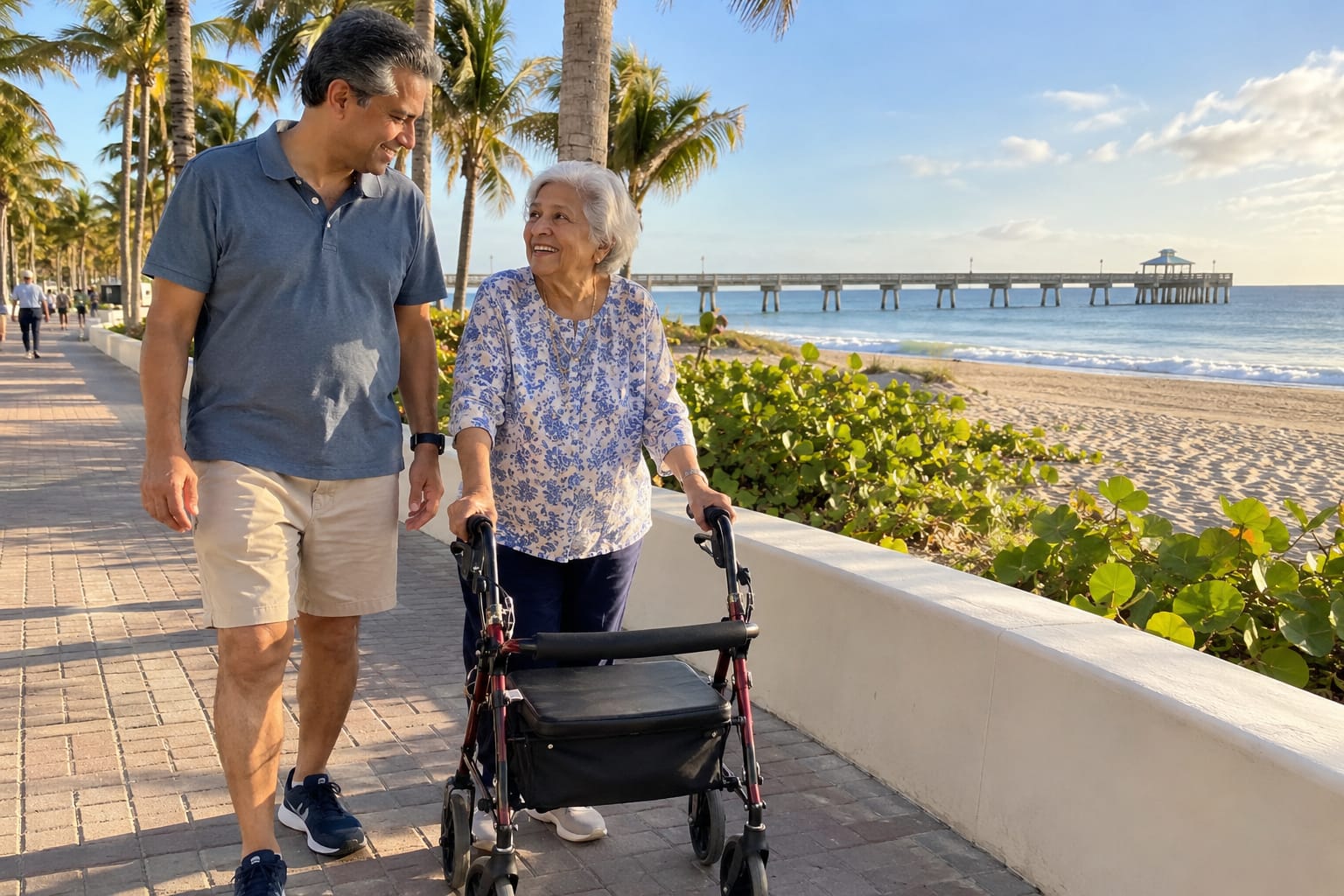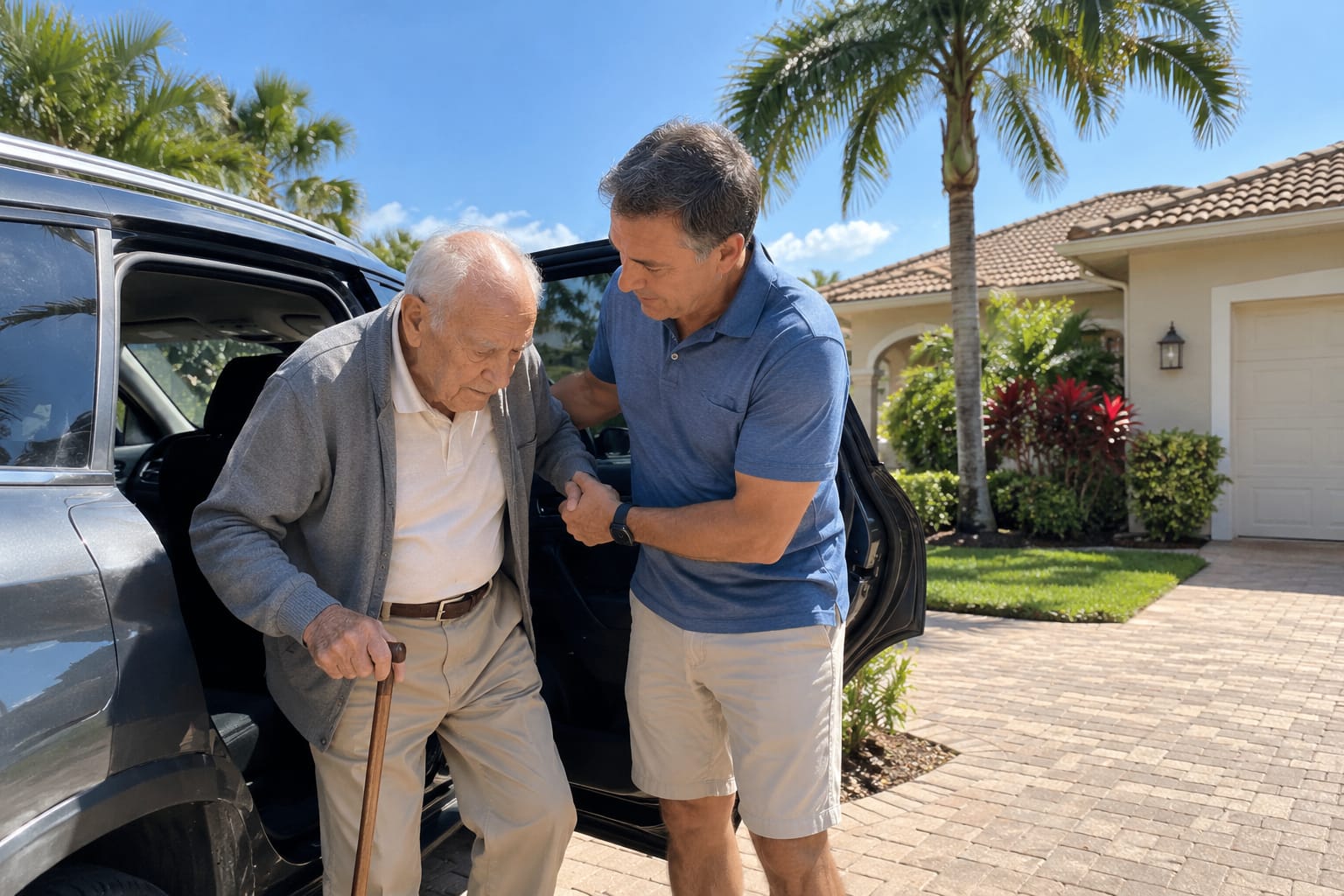

The short answer: Clearwater has 28 licensed, active assisted living facilities with a combined 1,702 licensed beds, according to AssistedLivingFacility.com directory data. The single most important thing to check before you sign anything is the facility's Florida license type — Standard, Limited Nursing Services, Extended Congregate Care, or Limited Mental Health — because that determines whether your parent can stay as their needs grow or will be asked to move again in a year or two. Cost, location and the building's hurricane evacuation zone come next.
What does Florida actually license as "assisted living"?
Florida law defines an assisted living facility broadly, which is why Clearwater options range from small residential-style homes to large campuses. Under Florida Statutes § 429.02(5), an ALF is any building, section of a building, private home, boarding home or other residential facility — for profit or not — that provides housing, meals, and one or more personal services for more than 24 hours to adults who are not relatives of the owner.
The yardstick staff use when they assess your parent is also written into statute. Section 429.02(1) defines activities of daily living (ADLs) as ambulation, bathing, dressing, eating, grooming and toileting. When a Clearwater marketing director says "we can handle two ADLs," those six functions are what they mean.
Every licensed ALF must have an administrator who is at least 21 years old and responsible for the facility's operation and maintenance, per § 429.02(2). Ask who that person is and how long they have held the job — administrator turnover is one of the clearest early warning signs in any community.
What's the difference between a Standard, LNS, ECC and Limited Mental Health license?
This is the question national listing sites skip, and it is the one that decides whether your family moves your parent once or three times. All four license types fall under Chapter 429, and all ALFs are also subject to AHCA's general health-care licensure, background screening and enforcement rules in Part II of Chapter 408, per § 429.07(1).
| License type | What it generally allows | Best fit when… |
|---|---|---|
| Standard | Housing, meals, personal care and supervision; help with ADLs and medication assistance | Your parent needs cueing, help dressing and bathing, and a safe, social setting |
| Limited Nursing Services (LNS) | A defined, limited set of nursing tasks on top of standard care | Needs are stable but include things like certain wound care or injections |
| Extended Congregate Care (ECC) | Services beyond a standard license, including care performed by nurses licensed under Part I of Chapter 464, for residents who would otherwise have to leave (§ 429.07) | You want the best shot at aging in place without another move |
| Limited Mental Health (LMH) | Required of any ALF that serves one or more mental health residents; the facility must keep each resident's community living support plan and cooperative agreement on file (§ 429.075) | A parent has a serious, long-standing psychiatric diagnosis alongside care needs |
ECC deserves a closer look. Florida only issues an ECC license to a facility that has already been licensed as an ALF for two or more years. If a community has been licensed less than two years, its initial ECC license must be provisional and may not exceed six months, and the licensee must notify the Agency for Health Care Administration in writing after admitting its first ECC resident — which triggers an unannounced compliance inspection (§ 429.07).
So when you tour, ask one blunt question: "What license types do you hold today, and what would make you discharge my mother?" Get the answer in writing and compare it to the residency agreement's discharge section.
How much does assisted living cost per month in Clearwater?
There is no single Clearwater price, and any site that advertises one "starting at" figure is quoting the smallest shared room with the lowest care level. What you will actually pay is built from four parts, and you should ask for each one separately:
- Base rent — tied to apartment size (studio, one-bedroom, shared) and whether it has a kitchenette or a view.
- Care level fee — usually tiered by ADL count and medication management, and it climbs as needs grow.
- Community or move-in fee — typically one time, sometimes partially refundable.
- À la carte add-ons — incontinence supplies, escorts to the dining room, transportation beyond the scheduled routes.
Two cost questions matter more than the headline rate. First: how far can the care fee rise before you would move her to a higher license level or discharge her? Second: when was the last base-rent increase, and by what percentage? Ask for the last three years of increases.
Community size also moves price. Across the 28 licensed Clearwater facilities in our directory, the 1,702 licensed beds work out to an average of roughly 61 beds per community — meaning Clearwater has both small residential-style homes and larger campuses, and the two price very differently. Browse current options on our Clearwater assisted living directory or compare nearby cities across Pinellas County.
Which Clearwater neighborhoods work best for an aging parent?
Geography matters here more than in most Florida cities, because Clearwater sits on a coastal peninsula with barrier islands attached to it. Four areas come up repeatedly in family searches:
- Belleair / Morton Plant corridor — clustered around Morton Plant Hospital at 300 Pinellas St (BayCare Health System), a major acute-care hospital serving Clearwater. Short ambulance runs and easy specialist visits.
- Countryside (north Clearwater) — quieter, close to medical offices and shopping, usually the easiest drive for adult children living in north Pinellas or Pasco.
- Downtown Clearwater / Cleveland Street District — walkable, close to transit and civic life.
- Clearwater Beach and Island Estates — beautiful, and on a barrier island. Read the hurricane section below before you fall in love with the view.
Pinellas County is the most densely populated county in Florida, with a median age above the state average, which concentrates home health agencies, dialysis centers, geriatric practices and ALFs within short driving distances. For a parent who no longer drives, also ask whether the community is on a Pinellas Suncoast Transit Authority (PSTA) route and whether residents qualify for PSTA's reduced-fare and door-to-door paratransit programs.
What happens during a hurricane?
Ask every Clearwater community three specific questions before you tour anything else:
- What is this address's Pinellas County evacuation zone? Much of coastal Clearwater falls in Zones A through C, meaning evacuation orders can come early in a storm.
- Where is the host facility you evacuate to, and is there a signed agreement? You want a name and a city, not "we have a plan."
- What does the emergency power plan cover? Specifically: which areas stay cooled, for how many hours, and how fuel is resupplied.
Also ask how families are notified and whether you are permitted to pick your parent up before an evacuation. Families who sort this out in June have a far calmer September.
How do I check a Clearwater facility's AHCA record?
Florida law requires AHCA to publish information on each licensed assisted living facility — including the facility's name and address, the owner or operator, the number and type of licensed beds, and the license types it holds (Chapter 429). That is the backbone of AHCA's public FloridaHealthFinder facility lookup.
A practical 10-minute walkthrough:
- Search the facility by name or by Clearwater as the city on AHCA's FloridaHealthFinder facility locator.
- Confirm the license type matches what the sales team told you — Standard, LNS, ECC, LMH.
- Check licensed bed count and the current license expiration date.
- Open the inspection and survey history; look for repeat deficiencies in the same category (medication, staffing, food service) rather than a single isolated citation.
- Note the owner or operator name, then search whether that operator runs other Pinellas facilities and how those look.
One more consumer protection most directories never mention: Florida Statutes § 429.293 establishes a presuit notice, investigation and claims-evaluation procedure — including informal discovery, a settlement offer and mediation — that must be followed before a lawsuit alleging violation of ALF residents' rights or negligence. Knowing that process exists changes how seriously you treat the residents' rights packet at move-in.
What should you do first?
Start with a needs assessment, not a tour. Call the Area Agency on Aging of Pasco-Pinellas — the local Aging and Disability Resource Center — to get screened for long-term care programs, and talk to your parent's physician about which ADLs they realistically need help with today and in a year. Then shortlist three to five licensed communities by license type and location, verify each one in AHCA's records, and visit at a mealtime unannounced. Compare Clearwater with neighboring options across Florida if cost or waitlists push you to look wider.